Kenya’s youth landscape is a barometer of the nation’s health.
- Political instability disrupts civic participation.
- Rising cost of living suppresses capital uptake and entrepreneurship
- Limited job pathways signal gaps in skills, digital access and market readiness
These indicators reveal where policy, investment and community leadership must join hands.
Against this backdrop, in 2025, SHOFCO saw some of its most significant progress in advancing youth-led and authored policy change and collective action.
From our leadership

Kennedy Odede
Chief Executive Officer
Grassroots power. I have never seen it shine brighter than in 2025 for Kenya’s youth. It has grown far beyond any one of us. I love that moment when young people realise they can solve their own problems by coming together, neighbor to neighbor, and recognising that they are the resource.
This year, our movement reached 2.5 million through our priority areas – Community Organizing, Gender Equality, Health and Wellbeing, Economic Empowerment and Community Resilience. Our advocacy platform, the SHOFCO Urban Network (SUN) with more than 2 million members, including 1.2 million youth, directly changed policies that shape their daily lives. More than 91,000 young people found dignified work at a time when youth unemployment in Kenya has risen to 67%. In rural Kenya, we have scaled locally founded climate solutions such as water pans and equipped 100,000 farmers with drought-resilient seeds. Our urban water system is set to become the first licensed water company serving an informal settlement in Kenya, expanding access to more than 100,000 households.
That is history in the making. What moves me most is that this impact is rising organically from the ground up. It is driven by millions of people who believe that change begins when neighbors stand side by side.
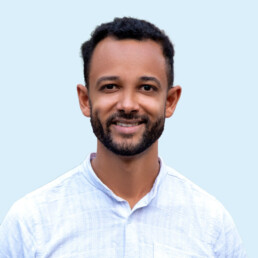
Mark Laichena
Chief Program and Strategy Officer
In 2025, our focus has been on building systems of care that combine safety, dignity, and hope across Kenya’s most marginalized urban, peri-urban, and rural communities. Through the Youth Agenda 2025, we helped bring mental health into Kenya’s Universal Health Coverage. That progress matters because mental health support helps keep girls in school and when girls are safe, healthy, and learning, entire communities rise. When communities rise together, peace follows. Our work on peace and reconciliation happens through SUN, where our members stand together across ethnic, political, and geographic lines to protect women and girls, strengthen climate resilience, and respond to the challenges of our time.
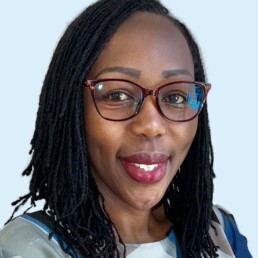
Angela Ng'etich
Director: Gender, Education, WASH
What excited me most about 2025 is seeing the shift in both what we deliver and how communities and government are beginning to own this work. We’re no longer just responding to gender-based violence; we’re changing how Kenya talks about it, prevents it, and protects survivors. We’ve built real partnerships with counties, trained community leaders to stand on the frontlines, and created pathways that keep girls safe and in school. This is the kind of change that lasts, and it’s just the beginning.

John Odero
Head of SHOFCO Urban Network (SUN)
Many people ask how and when we will scale further. The truth is, it is already happening through our community. Local leaders are opening new SUN sites and leading efforts that extend our reach on their own. What’s exciting is that we now support more than 80 community-based organizations working to reduce unemployment, gender-based violence, and waste, and to strengthen climate adaptation. We know too well that local organizations can deliver programs more cost-effectively than international groups. It simply makes sense to invest in leaders who are already trusted within their communities. That is what the next chapter of SHOFCO’s story is all about.
Impact Overview
2.5 Million Lives Touched Across Kenya
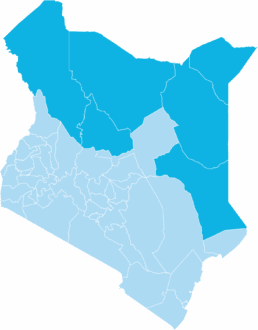
Our programs reached communities in 75% of Kenyan counties, unleashing the power, dignity, and hope of communities in informal settlements and underserved rural areas.
1.5 million
young people reached through youth voice forums.
91,022
verified youth in work; 63% female, 3% refugees, and 41% young mothers.
6,504
girls supported with scholarships to return to school, making SHOFCO the largest non-government provider in Kenya
470,105
household members reached through community health services.
12,000
mental health ambassadors trained to provide frontline support.
26,749
GBV cases handled with psychosocial and legal support.
Priority Highlights
What It Looked Like on the Ground
In 2025, we made bold moves across our five core priority areas.
Community Organizing
Building grassroots power and policy influence from the ground up.
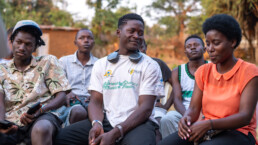
We work hand in hand with communities in informal settlements to build strong networks and local leadership that can advocate for rights, solve shared challenges, and influence the policies that shape daily life.
In 2025, community leadership turned advocacy into action that changed lives throughout Kenya. Through 41,000 youth forums, young people gathered to discuss priorities and drive solutions in their communities. Their efforts helped secure the removal of the National ID replacement fee of KES 1,000 for lost or damaged IDs, a major barrier for many young people seeking jobs or government services. This was achieved through a series of petitions, youth forums, and stakeholder meetings where SUN leaders demonstrated how ID access directly affects economic opportunity and civic participation. Strengthened collaboration between SUN and 29 county governments further advanced this work, translating local priorities into policy and new budget allocations for youth and women’s programs. Today, SUN spans 84 active sites and continues to unite communities around a single belief that when people organize, progress follows.
Highlights
- 41,000+ youth forums held across Kenya through SUN, reaching 1.2 million youth.
- Government’s removal of KES 1,000 fee for lost or damaged IDs.
- Policy engagement with 29 county governments, resulted in inclusion of community priorities in county development plans.
- 84 active SUN sites, with new leadership structures integrating persons with disabilities and refugees.
In Focus
How our Youth Agenda brought mental health care into Kenya’s Universal Health Coverage
“We presented the Youth Agenda to the Council of Governors. Weeks later…one of our priorities, youth mental health, had been integrated into Kenya’s Universal Health Coverage …mental health care is now recognized as a core national service”
Sylvia Odhiambo, SHOFCO Urban Network (SUN)
Gender Equality
Placing girls and women at the heart of health, safety, and rights.
We advance gender equity by addressing the many factors that shape the physical, mental, and social well-being of women and girls. Our approach spans education, health, safety, financial inclusion, and community leadership, ensuring that women and girls have both the resources and the voice to lead change in their own lives and communities.
In 2025, SHOFCO strengthened child protection systems and partnerships that safeguard the rights and futures of marginalized girls, in an effort to support over 500,000 to overcome the root causes of school dropout. We tackled poverty-driven barriers, improved school infrastructure, and linked girls to mentorship, sanitary products, and psychosocial care. Access to safe, affordable water and sanitation expanded to 11,929 households, and 31,982 students joined school WASH clubs promoting hygiene and dignity. Collaboration with 15 county governments and national ministries enhanced coordination and accountability for girls’ protection and education. Community health promoters and SUN gender champions led over 6,000 dialogues challenging harmful norms and mobilizing families to support girls’ rights. In parallel, 1,553 GBV leaders and male champions were trained, 26,749 survivors received comprehensive care, and 3,800 vulnerable girls stayed in school through bursaries and scholarships.
Highlights
- 28,630 adolescent girls reached through Reclaim Our Confidence (ROC) clubs
- 26,749 GBV cases managed with legal and psychosocial care
- 3,556 vulnerable girls received support to remain in school.
- 3829 bursaries and scholarships provided to secondary school girls
In Focus
From access to agency for children across Kenya
“This moment was a symbol for us. It meant our systems between private, NGO, and government, which SHOFCO has been working tirelessly to strengthen, are starting to see survivors as whole people, not just victims of violence.”
Caroline Sakwa, Head of Gender and Inclusion
Health and Wellbeing
Keeping communities healthy and resilient.
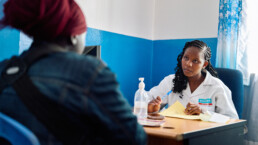
We ensure access to affordable, high-quality health services that improve lives and strengthen community resilience. By addressing critical healthcare needs, supporting public health infrastructure, and expanding access to clean water and sanitation, we help individuals lead healthier, more fulfilling lives.
In 2025, SHOFCO continued to strengthen access to affordable, quality healthcare and clean water for communities in informal settlements. Despite the closure of several donor-funded clinics, our community health teams maintained services across all sites, with a 70% increase in demand as families sought care from SHOFCO facilities. Over 37,500 people accessed safe, clean water daily through our aerial piping system, and 5,853 households benefited from upgraded public washrooms and new hygiene campaigns. More than 1,000 mental health ambassadors were trained, and our youth advocacy helped integrate mental health into Kenya’s Universal Health Coverage policy. Across Kibera, Mathare, and beyond, our clinics achieved a 0% mother-to-child HIV transmission rate compared to a national average of 15%, ensuring healthier, more resilient families.
Highlights
- Community health workers supported across all urban sites, even after USAID cuts
- Family planning outreach maintained through informal networks (e.g., Mathare)
- Expanded access to UHC mental health services through SUN-led policy change
- Public washroom retrofits and new hygiene campaigns reached 5,853 households
In Focus
How SHOFCO stepped up when USAID closed its doors
“When many nearby clinics closed after the USAID closeout, our work did not stop. Demand rose by 70% as people from other clinics came to us.”
Florence Aluoch, Community Health Promoter, Mathare
Economic Opportunity
Creating dignified work and long-term earning potential.
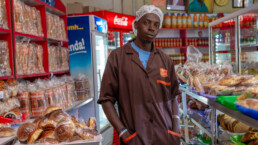
We create pathways for individuals to realize their potential by providing the skills, tools, and financial access needed for dignified work and long-term stability. Our approach turns opportunity into independence and connects people to sustainable livelihoods that support thriving communities.
In Kenya, more than 800,000 young people enter the workforce each year, yet nearly 40% remain unemployed or underemployed, many in informal settlements where options are scarce. In 2025, SHOFCO expanded access to dignified work and financial inclusion to help close this gap. More than 91,000 youth secured jobs, 69% of them women. Vocational training equipped 1,482 individuals in the apparel sector, with 794 placed in formal employment, while others were licensed for insurance sales and retail roles through new private-sector partnerships. Over 18,000 members accessed savings and credit through SHOFCO SACCO, and nearly 10,000 women participated in income-generating activities. Together, these efforts helped young people transition from informal survival work to sustainable livelihoods, building a more inclusive and resilient economy.
Highlights
- 91,000+ youth placed into dignified jobs; 69% women
- Apparel sector training: 1,482 trained, 794 placed
- Youth licensed in insurance sales via APA partnership
- 76 youth placed in Carrefour retail jobs in Kilifi alone
In Focus
From training to real jobs
“I love that SHOFCO doesn’t stop at training. We walk with our youth until they’re earning, contributing, and standing on their own feet. Through new partnerships with employers across the country, we’re connecting thousands of young people to real, dignified work.”
Damaris Ndua, Sustainable Livelihoods team
Community Resilience
Building adaptive systems that enable communities to thrive.
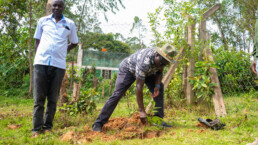
We nurture the collective strength of communities, equipping them with the knowledge, skills, and resources to adapt and thrive. By connecting essential services with local leadership and sustainable livelihoods, we help communities move beyond survival and build resilience that lasts.
In 2025, SHOFCO strengthened community systems that help households adapt to economic and environmental challenges. Over 100,000 farmers received drought-resistant seeds, and more than 50 water pans were built across Siaya, Migori, and Homa Bay to support food security and sustainable agriculture. Household hygiene campaigns reached 26,511 individuals, and 31,982 students participated in school WASH clubs promoting health and environmental stewardship. Across 84 active SUN sites, communities mobilized to identify local challenges, advocate for change, and strengthen collective action. These efforts continue to build a foundation of self-sustaining resilience, where health, livelihoods, and leadership reinforce one another for lasting progress.
Highlights
- 100,000+ farmers received drought-resistant seeds
- 50+ water pans constructed across Siaya, Migori, and Homa Bay
- 26,511 individuals reached through household-level hygiene campaigns.
- 31,982 students engaged through school WASH clubs.
In Focus
How we are supporting climate adaptation and resilience across our communities
“Where people thought nothing could grow and we are growing everything – food, trees, and possibility.”
George Okewa, SUN Regional Lead, Nyanza
Reflections and learnings
What we learned in 2025
Real change doesn’t follow a straight line. Here’s how our teams adapted, listened, and evolved with communities this year.
1
Youth livelihoods succeed when supply, demand, and systems shift together.
We’ve learned that training alone cannot solve youth unemployment. Young people face overlapping challenges: the need for the right mix of technical skills, digital literacy, exposure to real workplaces, and access to financing; the need for meaningful engagement with employers; and the reality of structural barriers such as documentation, childcare, connectivity. Treating these barriers in isolation leads to fragmented results.
Team Insight

“When I meet young people finishing our training programs, they often ask, “Will I actually get a job?” It is a fair question. My favorite part of this work is being able to say yes and mean it. Ni wakati wa kufanya kazi. It’s time to work.”
Damaris Ndua, Sustainable Livelihoods
Lesson:
Unemployment is not a single problem and cannot be solved with a single intervention. Our most effective livelihoods models address supply, demand, and systemic constraints together, ensuring young people can fully participate in the economy.
2
Ownership equals sustainability.
Our long-standing model for community waste management relied on monthly stipends for youth to conduct cleanups. While effective in the short term, it proved financially unsustainable and offered little long-term ownership. To address this, SHOFCO launched a community-wide Call for Ideas inviting residents to design their own waste management solutions. More than 30 concepts were pitched, and the best were supported with small seed grants.
Lesson:
Short-term incentives create activity; community ownership creates sustainability. Our model is shifting from stipend-based cleanup work to community-led enterprises, with funding redirected toward seed grants for viable, locally driven waste management initiatives that can sustain themselves beyond SHOFCO support.
3
Community-led is community-kept.
We shifted away from NGO-led messaging to embed Gender Champions inside our SUN governance structures. Over 1,000 trained champions now lead prevention, referral, and awareness activities in their own communities, reaching more than 100,000 people with messages on gender equality and protection. This allowed more sustainable, embedded prevention and response.
Team Insight

“True gender care means combining shelter, counseling, medical care, legal aid, and hope under one roof, while ensuring all partners…work together to make lasting systems of care possible.”
Caroline Sakwa, Gender Lead, SHOFCO
Lesson:
Program success improves when community members lead the charge and own the impact.
4
Technology strengthens community learning.
As SHOFCO’s youth voice forums expanded to 19 counties, following up with every participant became increasingly difficult. In response, SHOFCO piloted a WhatsApp chatbot to extend learning beyond in-person forums. Through the platform, youth can ask questions, receive local updates, and access reliable information on governance and civic participation.
Lesson:
Technology cannot replace community learning, but it can strengthen it. The chatbot keeps youth engaged and informed between forums, making civic participation and mentorship more consistent and accessible across the country.
5
Home is the first classroom.
Our education teams found that the greatest driver of learning wasn’t always at school. It was the support children received at home. Early literacy and numeracy assessments showed that children who received help with schoolwork from parents or caregivers were three times more likely to meet learning expectations. Our new Parental Empowerment and Engagement trainings are now helping caregivers gain the confidence and tools to support learning at home.
Team Insight
“We want no girl pushed out of education because of violence, pregnancy or preventable illness. The scale we have reached this year shows how possible that ambition is becoming.”
Angela Ngetich, Program Director, Education, WASH, and Gender
Lesson:
Education outcomes are not determined by school inputs alone. Engaged parents and caregivers are essential to every child’s learning success.
6
Digital spaces can build trust.
Young people were struggling to attend our in-person mental health sessions due to stigma, distance, or cost. To close that gap, we launched virtual peer-led sessions every Saturday, co-facilitated by youth ambassadors and technical experts. The sessions reached 9,000 young people across seven counties including Nairobi, Mombasa, and Kisumu, while 5,000 ambassadors joined reflection meetings in their communities to keep conversations going. Nearly half of all participants engaged directly by asking questions or sharing experiences online.
Lesson:
Openness creates connection. By combining digital access with peer leadership, SHOFCO is breaking stigma and ensuring that more young people can talk about mental health and find support when they need it.
Your Support Matters
Thank you for being part of our 2025 journey
Thank you for taking the time to learn about SHOFCO’s work in 2025. If you’d like to support what comes next in 2026, there are a few simple ways to get involved:
Champion
Help amplify our work. Share this report with your community or on social media and help more people see what’s possible.
Invite
Open doors. Connect us with people in your network who care about equity, community-led change, and long-term impact.
Invest
Giving monthly helps power both strategy and soul behind our work. Predictable generosity is sustained impact.